ADMX1001 & ADMX1002
Ultra-low distortion, low noise signal generator and acquisition evaluation modules.
Overview
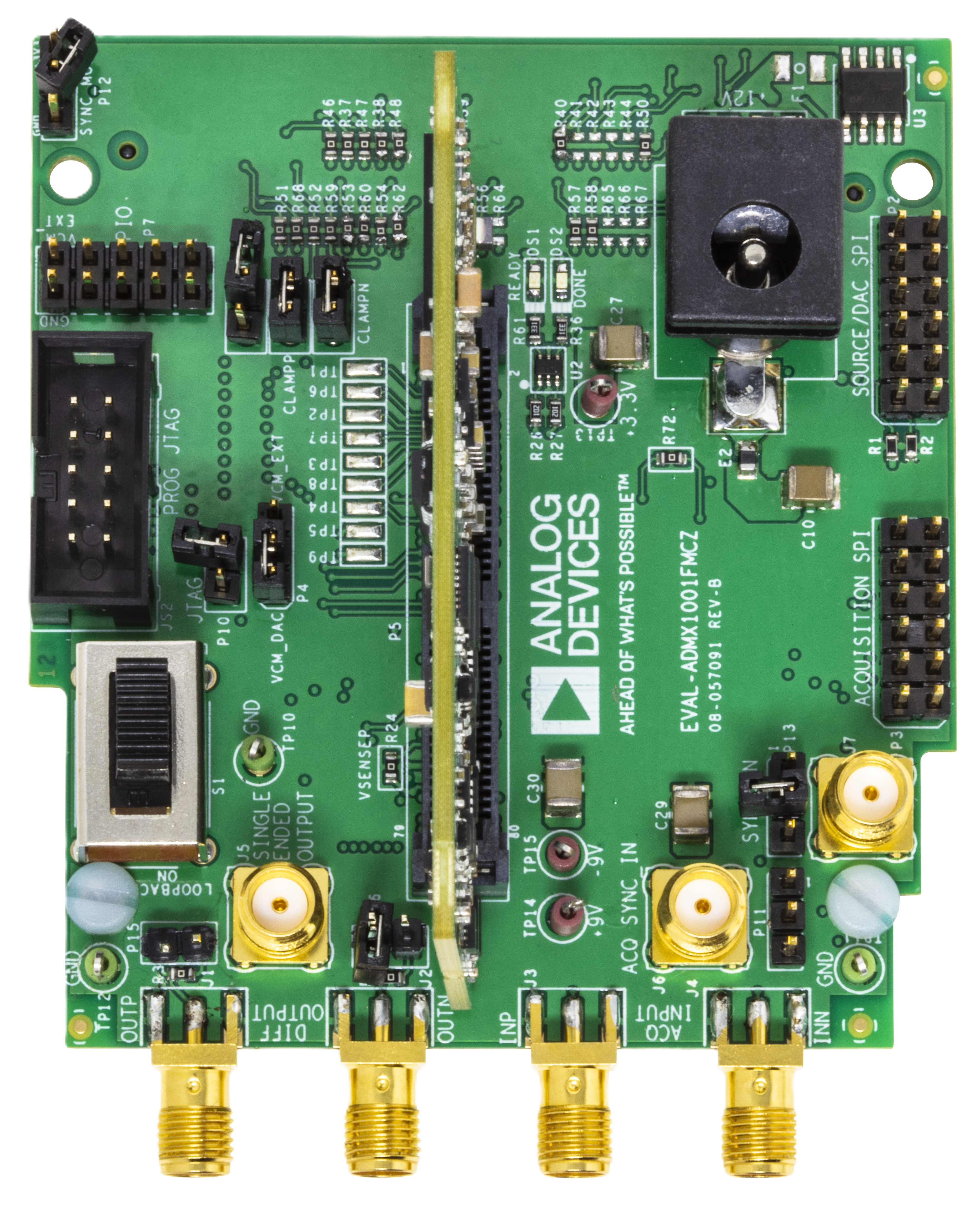
The EVAL-ADMX100X-FMCZ is an evaluation board for the ADMX1001 and ADMX1002 ultra-low distortion, low-noise signal generator modules from Analog Devices. The EVAL-ADMX100X-FMCZ evaluation board provides the necessary interface circuitry to connect the ADMX100X module to a host PC via the SDP-H1 controller board, or alternatively via the SDP-S or SDP-B controller boards with the SDP-I-PMOD interposer.
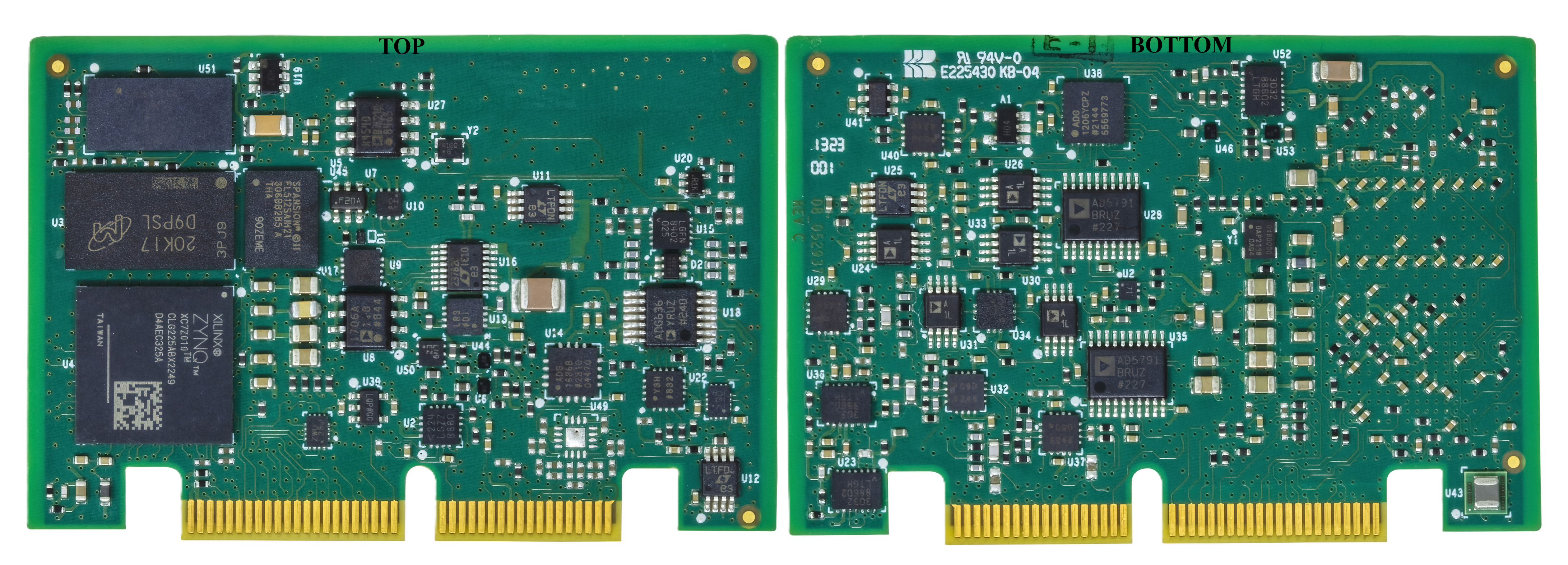
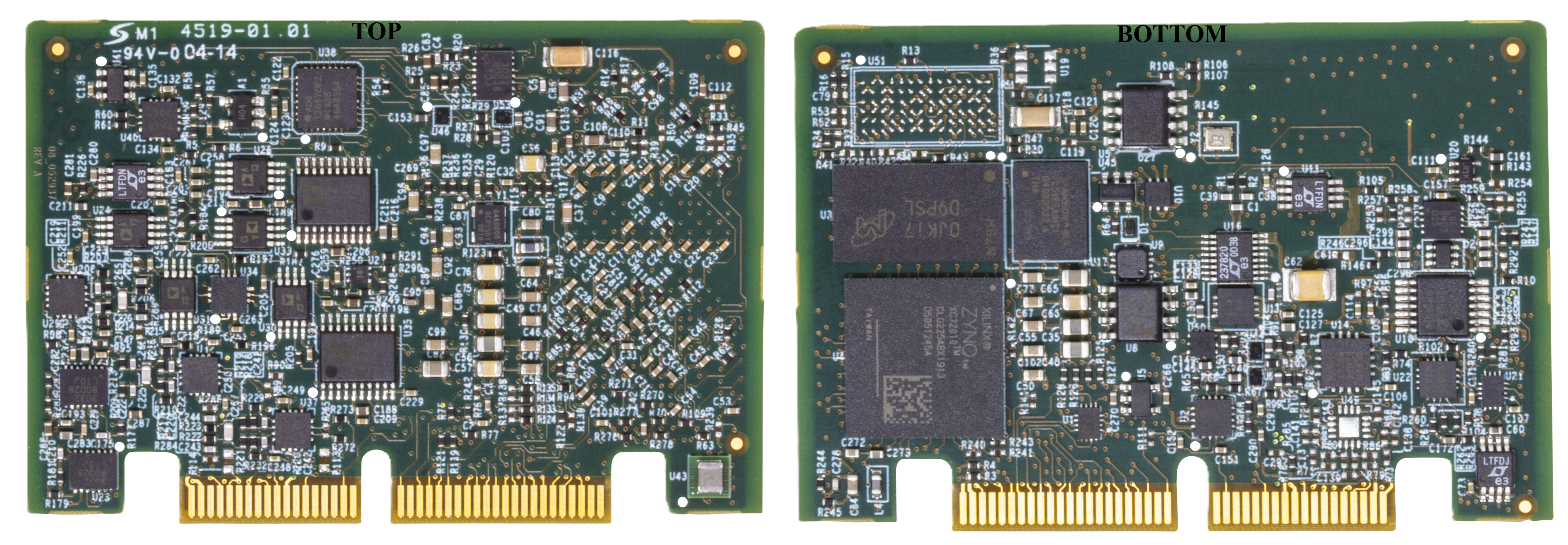
The ADMX1001 and ADMX1002 modules are high-performance signal generators designed for applications requiring ultra-low harmonic distortion. The DPD algorithm exploits a patented differential temporal and amplitude sensing method that requires no external reference inputs, enabling exceptional signal purity through self-sensing correction. The ADMX1001 and ADMX1002 are capable of generating signals up to 40 kHz without Digital Pre-Distortion (DPD), or up to 20 kHz with DPD enabled, achieving −130 dBc typical Total Harmonic Distortion (THD) at 1 kHz.
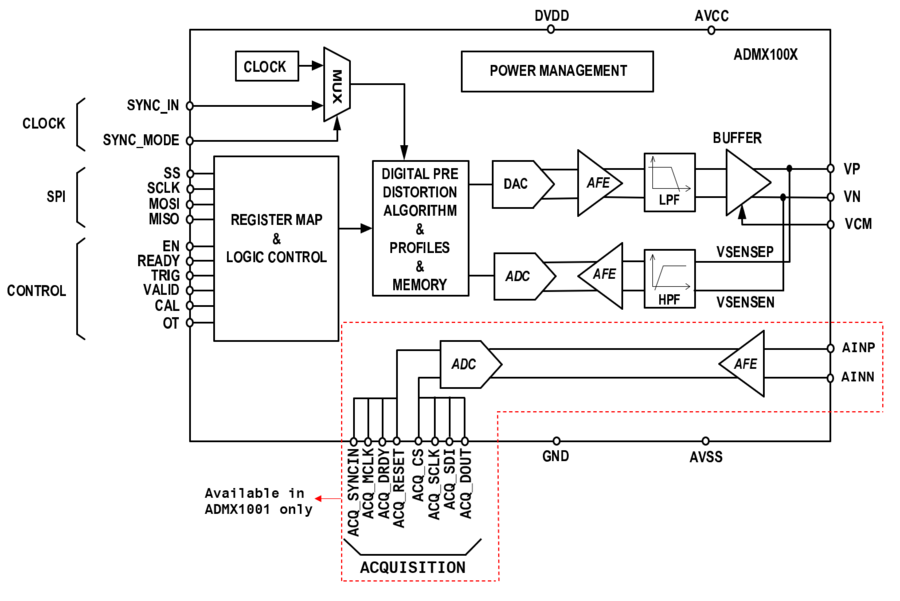
The ADMX1001 uniquely includes a differential input acquisition channel to measure a signal of choice, while the ADMX1002 focuses solely on signal generation.
Features:
SPI and ATE communication interface
On-board power supply regulation
External common-mode voltage option
Sync In and Sync Out for coherent sampling
External output clamp voltage option
Differential to single-ended conversion
Applications:
Audio test and measurement
Automated test equipment (ATE)
Coherent sampling and ADC evaluation
Ultra-low distortion signal generation
Laboratory signal source
Recommendations
People who follow the flow that is outlined, have a much better experience with things. However, like many things, documentation is never as complete as it should be. If you have any questions, feel free to ask on our EngineerZone forums, but before that, please make sure you read our documentation thoroughly.
To better understand the ADMX1001 / ADMX1002, we recommend to use the EVAL-ADMX100X-FMCZ evaluation board.
Table of contents
Using the evaluation board:
Prerequisites — what you need to get started
More information
Block diagram
ADI article
Videos
Warning
All the products described on this page include ESD (electrostatic discharge) sensitive devices. Electrostatic charges as high as 4000V readily accumulate on the human body or test equipment and can discharge without detection. Although the boards feature ESD protection circuitry, permanent damage may occur on devices subjected to high-energy electrostatic discharges. Therefore, proper ESD precautions are recommended to avoid performance degradation or loss of functionality. This includes removing static charge on external equipment, cables, or antennas before connecting to the device.
Help and support
For questions and more information, please visit the EngineerZone technical support community.