

ADRV903x HDL reference design
The ADRV903x is a highly integrated, system on chip (SoC) radio frequency (RF) agile transceiver with integrated digital front end (DFE). The SoC contains eight transmitters, two observation receivers for monitoring transmitter channels, eight receivers, integrated LO and clock synthesizers, and digital signal processing functions. The SoC meets the high radio performance and low power consumption demanded by cellular infrastructure applications, such as software-definded radios, portable instrumentation and military communications.
Supported devices
Supported boards
Supported carriers
Evaluation board |
Carrier |
FMC slot |
|---|---|---|
EVAL-ADRV903x |
FMC HPC0 |
Block design
Block diagram
The data path and clock domains are depicted in the below diagrams:
Example block design for Single link
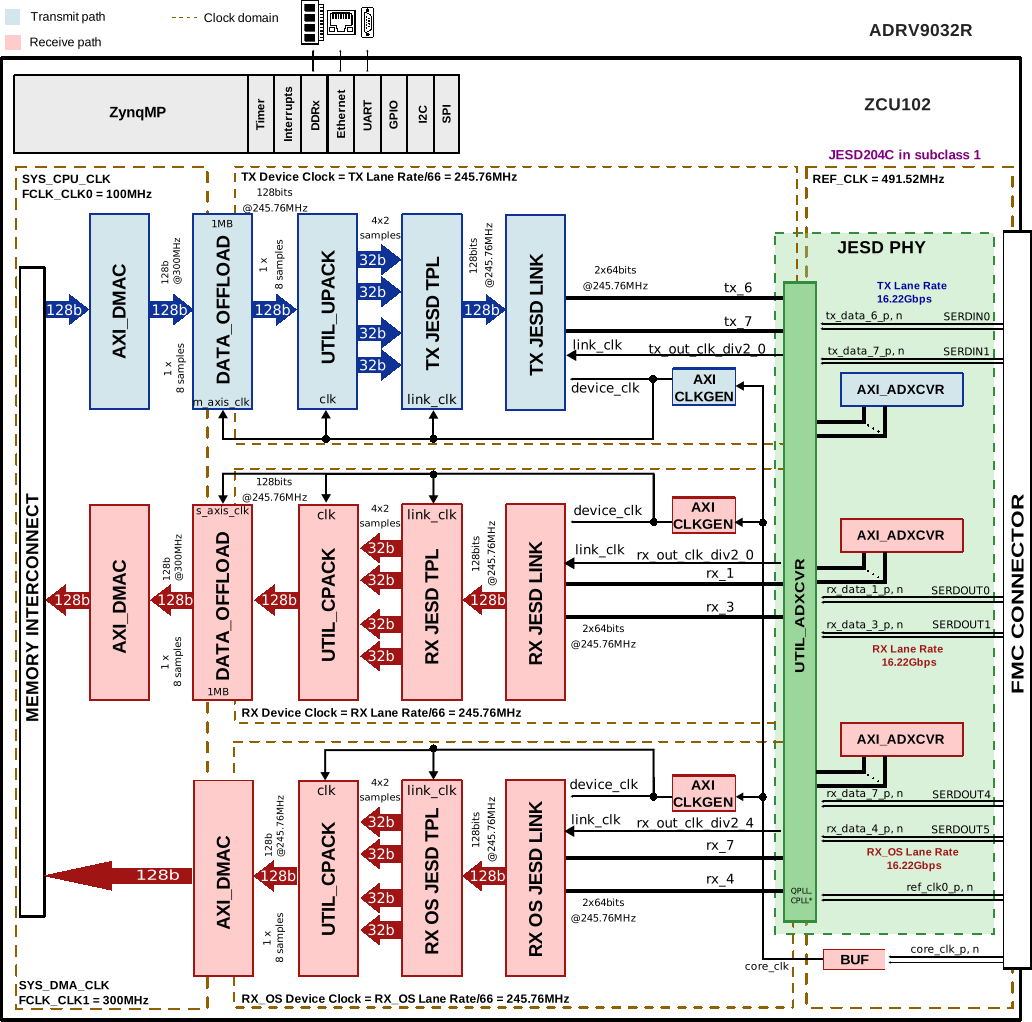
The Rx links (ADC Path) operate with the following parameters:
Rx Deframer parameters: L=2, M=4, F=4, S=1, NP=16, N=16
Sample Rate: 491.52 MSPS
Dual link: No
RX_DEVICE_CLK: 245.76 MHz (Lane Rate/66)
REF_CLK: 491.52 MHz
JESD204C Lane Rate: 16.22 Gbps
QPLL0
The Tx links (DAC Path) operate with the following parameters:
Tx Deframer parameters: L=2, M=4, F=4, S=1, NP=16, N=16
Sample Rate: 491.52 MSPS
Dual link: No
TX_DEVICE_CLK: 245.76 MHz (Lane Rate/66)
REF_CLK: 491.52 MHz
JESD204C Lane Rate: 16.22 Gbps
QPLL0
The ORx links (ADC Obs Path) operate with the following parameters:
ORx Deframer parameters: L=2, M=4, F=4, S=1, NP=16, N=16
Sample Rate: 491.52 MSPS
Dual link: No
ORX_DEVICE_CLK: 245.76 MHz (Lane Rate/66)
REF_CLK: 491.52 MHz
JESD204C Lane Rate: 16.22 Gbps
QPLL0
Configuration modes
The block design supports configuration of parameters and scales.
We have listed a couple of examples at section Building the HDL project and the default modes for each project.
Note
The parameters for Rx or Tx links can be changed from the system_project.tcl file, located in hdl/projects/adrv903x/$CARRIER/system_project.tcl
The following are the parameters of this project that can be configured:
JESD_MODE: used link layer encoder mode
64B66B - 64b66b link layer defined in JESD204C
8B10B - 8b10b link layer defined in JESD204B
ORX_ENABLE : Additional data path for RX-OS
0 - Disabled (used for profiles with RX-OS disabled)
1 - Enabled (used for profiles with RX-OS enabled)
RX_LANE_RATE: Transceiver lane rate of the Rx link
TX_LANE_RATE: Transceiver lane rate of the Tx link
[RX/TX/RX_OS]_JESD_M: number of converters per link
[RX/TX/RX_OS]_JESD_L: number of lanes per link
[RX/TX/RX_OS]_JESD_S: number of samples per frame
[RX/TX/RX_OS]_JESD_NP: number of bits per sample
[RX/TX/RX_OS]_TPL_WIDTH : TPL data path width in bits
[RX/TX/RX_OS]_NUM_LINKS: number of links
Clock scheme

CPU/Memory interconnects addresses
The addresses are dependent on the architecture of the FPGA, having an offset added to the base address from HDL (see more at CPU/Memory interconnects addresses).
Instance |
ZynqMP |
|---|---|
axi_adrv903x_tx_jesd |
0x84A9_0000 |
axi_adrv903x_rx_jesd |
0x84AA_0000 |
axi_adrv903x_rx_os_jesd |
0x85AA_0000 |
axi_adrv903x_tx_dma |
0x9C42_0000 |
axi_adrv903x_rx_dma |
0x9C40_0000 |
axi_adrv903x_rx_os_dma |
0x9C80_0000 |
tx_adrv903x_tpl_core |
0x84A0_4000 |
rx_adrv903x_tpl_core |
0x84A0_0000 |
rx_os_adrv903x_tpl_core |
0x84A0_8000 |
axi_adrv903x_tx_xcvr |
0x84A8_0000 |
axi_adrv903x_rx_xcvr |
0x84A6_0000 |
axi_adrv903x_rx_os_xcvr |
0x85A6_0000 |
axi_adrv903x_tx_clkgen |
0x83C0_0000 |
axi_adrv903x_rx_clkgen |
0x83C1_0000 |
axi_adrv903x_rx_os_clkgen |
0x83C2_0000 |
adrv903x_tx_data_offload |
0x9c44_0000 |
adrv903x_rx_data_offload |
0x9c45_0000 |
SPI connections
SPI type |
SPI manager instance |
SPI subordinate |
CS |
|---|---|---|---|
PS |
spi0 |
ADRV903x |
0 |
AD9528 |
1 |
GPIOs
GPIO signal |
Direction |
HDL GPIO EMIO |
Software GPIO |
|---|---|---|---|
(from FPGA view) |
Zynq MP |
||
ad9528_reset_b |
INOUT |
69 |
147 |
ad9528_sysref_req |
INOUT |
68 |
146 |
adrv903x_trx0_enable |
INOUT |
67 |
145 |
adrv903x_trx1_enable |
INOUT |
66 |
144 |
adrv903x_trx2_enable |
INOUT |
65 |
143 |
adrv903x_trx3_enable |
INOUT |
64 |
142 |
adrv903x_trx4_enable |
INOUT |
63 |
141 |
adrv903x_trx5_enable |
INOUT |
62 |
140 |
adrv903x_trx6_enable |
INOUT |
61 |
139 |
adrv903x_trx7_enable |
INOUT |
60 |
138 |
adrv903x_orx0_enable |
INOUT |
59 |
137 |
adrv903x_orx1_enable |
INOUT |
58 |
136 |
adrv903x_test |
INOUT |
57 |
135 |
adrv903x_reset_b |
INOUT |
56 |
134 |
adrv903x_gpio[0:23] |
INOUT |
55:32 |
133:110 |
Interrupts
Below are the Programmable Logic interrupts used in this project.
Instance name |
HDL |
Linux ZynqMP |
Actual ZynqMP |
|---|---|---|---|
axi_adrv903x_tx_jesd |
10 |
106 |
138 |
axi_adrv903x_rx_jesd |
11 |
107 |
139 |
axi_adrv903x_rx_os_jesd |
12 |
108 |
140 |
axi_adrv903x_tx_dma |
13 |
109 |
141 |
axi_adrv903x_rx_dma |
14 |
110 |
142 |
axi_adrv903x_rx_os_dma |
15 |
111 |
143 |
Building the HDL project
The design is built upon ADI’s generic HDL reference design framework. ADI distributes the bit/elf files of these projects as part of the ADI Kuiper Linux. If you want to build the sources, ADI makes them available on the HDL repository. To get the source you must clone the HDL repository.
Then go to the projects/adrv903x location and run the make command by typing in your command prompt:
Linux/Cygwin/WSL
~$
cd hdl/projects/adrv903x/zcu102
~/hdl/projects/adrv903x/zcu102$
make
The following dropdowns contain tables with the parameters that can be used to configure this project, depending on the carrier used. Where a cell contains a — (dash) it means that the parameter doesn’t exist for that project (adrv903x/carrier or adrv903x/carrier).
Parameter |
Default value of the parameters depending on carrier |
|---|---|
ZCU102 |
|
JESD_MODE |
64B66B |
ORX_ENABLE |
1 |
RX_LANE_RATE |
16.22 |
TX_LANE_RATE |
16.22 |
TX_NUM_LINKS |
1 |
RX_NUM_LINKS |
1 |
RX_OS_NUM_LINKS |
1 |
RX_JESD_M |
4 |
RX_JESD_L |
2 |
RX_JESD_S |
1 |
RX_JESD_NP |
16 |
RX_JESD_TPL_WIDTH |
{} |
TX_JESD_M |
4 |
TX_JESD_L |
2 |
TX_JESD_S |
1 |
TX_JESD_NP |
16 |
TX_JESD_TPL_WIDTH |
{} |
RX_OS_JESD_M |
4 |
RX_OS_JESD_L |
2 |
RX_OS_JESD_S |
1 |
RX_OS_JESD_NP |
16 |
RX_OS_JESD_TPL_WIDTH |
{} |
A more comprehensive build guide can be found in the Build an HDL project user guide.
Other considerations
ADC - lane mapping
Due to physical constraints, Rx lanes are reordered as described in the following table.
ADC Lane |
FMC DP |
FPGA Rx lane / Logical Lane |
PHY lane / XCVR Lane |
|---|---|---|---|
SERDOUT0 |
DP5 |
rx_data_p/n[0] |
rx_data_1_p/n |
SERDOUT1 |
DP4 |
rx_data_p/n[1] |
rx_data_3_p/n |
SERDOUT2 |
DP6 |
rx_data_p/n[2] |
rx_data_0_p/n |
SERDOUT3 |
DP7 |
rx_data_p/n[3] |
rx_data_2_p/n |
SERDOUT4 |
DP2 |
rx_data_p/n[4] |
rx_data_7_p/n |
SERDOUT5 |
DP3 |
rx_data_p/n[5] |
rx_data_4_p/n |
SERDOUT6 |
DP1 |
rx_data_p/n[6] |
rx_data_5_p/n |
SERDOUT7 |
DP0 |
rx_data_p/n[7] |
rx_data_6_p/n |
DAC - lane mapping
Due to physical constraints, Tx lanes are reordered as described in the following table.
DAC Lane |
FMC DP |
FPGA Tx lane / Logical Lane |
PHY lane / XCVR Lane |
|---|---|---|---|
SERDIN0 |
DP0 |
tx_data_p/n[0] |
tx_data_6_p/n |
SERDIN1 |
DP2 |
tx_data_p/n[1] |
tx_data_7_p/n |
SERDIN2 |
DP1 |
tx_data_p/n[2] |
tx_data_5_p/n |
SERDIN3 |
DP3 |
tx_data_p/n[3] |
tx_data_4_p/n |
SERDIN4 |
DP7 |
tx_data_p/n[4] |
tx_data_2_p/n |
SERDIN5 |
DP6 |
tx_data_p/n[5] |
tx_data_0_p/n |
SERDIN6 |
DP5 |
tx_data_p/n[6] |
tx_data_1_p/n |
SERDIN7 |
DP4 |
tx_data_p/n[7] |
tx_data_3_p/n |
Resources
More information
Support
Analog Devices, Inc. will provide limited online support for anyone using the reference design with ADI components via the EngineerZone FPGA reference designs forum.
For questions regarding the ADI Linux device drivers, device trees, etc. from our Linux GitHub repository, the team will offer support on the EngineerZone Linux software drivers forum.
For questions concerning the ADI No-OS drivers, from our No-OS GitHub repository, the team will offer support on the EngineerZone microcontroller No-OS drivers forum.
It should be noted, that the older the tools’ versions and release branches are, the lower the chances to receive support from ADI engineers.