EVAL-ADRV9032
Integrated 2T2R TDD and FDD RadioVerse Transceiver with Dual Observation Paths.
Overview
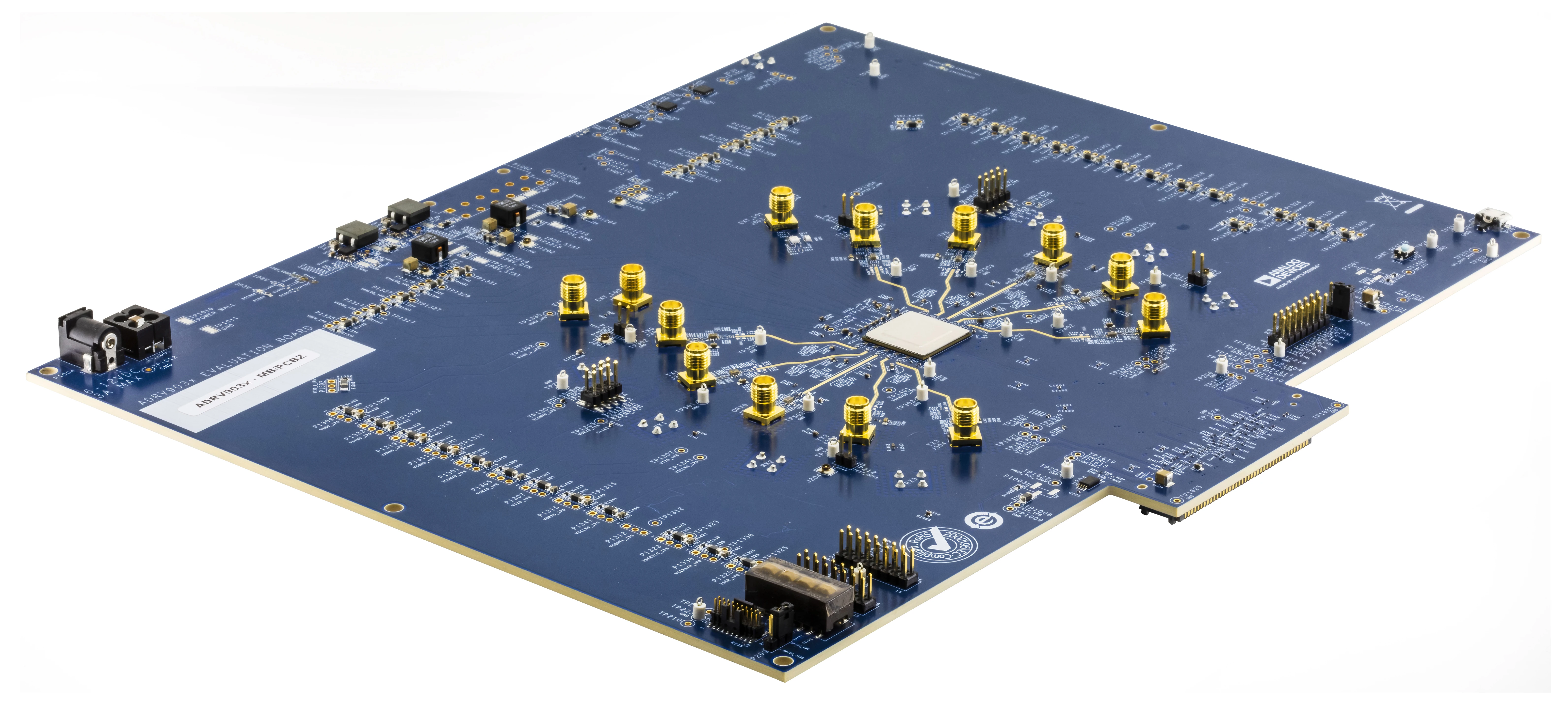
The EVAL-ADRV903x, is an FMC radio card designed to showcase the ADRV9032 and ADRV9032R, highly integrated, radio frequency (RF) agile transceivers offering 2 independently controlled transmitters, dual observation receiver inputs for monitoring transmitter channels, 2 independently controlled receivers, integrated local oscillator (LO) and clock synthesizers, and digital signal processing functions providing a complete transceiver solution.
The device provides the high radio performance and low-power consumption demanded by cellular infrastructure applications, software-defined radios, portable instruments, and military communications.
Features:
Both chips feature:
2 differential transmitters & 2 differential receivers
2 differential observation receivers
Support for TDD and FDD applications
LO tunable range: 450 MHz to 7125 MHz
RF range: 350 MHz to 7225 MHz
Maximum transmitter large-signal bandwidth: 200 MHz
Maximum transmitter synthesis bandwidth: 450 MHz
Maximum receiver signal bandwidth: 200 MHz
Maximum observation receiver signal bandwidth: 450 MHz
JESD204B and JESD204C digital interface: up to 16.5 Gbps
Low power consumption: 4.82 W for TDD mode with 200 MHz bandwidth
Complete ADRV9032/ADRV9032R radio cards for evaluation
FMC connector for FPGA integration
Fully integrated fractional-N RF synthesizer
Fully integrated clock synthesizer
Dual external LO inputs supporting operation up to 6 GHz (ADRV9032R)
Applications:
Software defined radios
Portable instrumentation
Military communications
General-purpose radios
Wireless infrastructure
3G/4G/5G TDD and FDD base stations
Recommendations
People who follow the flow that is outlined, have a much better experience with things. However, like many things, documentation is never as complete as it should be. If you have any questions, feel free to ask on our EngineerZone forums, but before that, please make sure you read our documentation thoroughly.
To better understand the ADRV9032 / ADRV9032R, we recommend to use the EVAL-ADRV903x evaluation board.
Table of contents
Using the evaluation board/full stack reference design that we offer:
Prerequisites - what you need to get started
-
Using the ZCU102/Zynq UltraScale+ MP SoC
Configure an SD Card with Kuiper
Linux Applications
Design with the ADRV9032/ADRV9032R
Hardware in the Loop / How to design your own custom BaseBand
Resources for designing a custom ADRV9032/ADRV9032R-based platform software
For Linux software:
About the device driver:
ADRV9032/ADRV9032R Linux device driver (in-tree at drivers/iio/adc/adrv903x/adrv903x.c)
About the device tree:
About the JESD204 utilities:
Changing the VCXO frequency and updating the default RF Transceiver Profile
HDL reference design which you must use in your FPGA. More HDL build details at Build an HDL project.
Additional documentation about SDR Signal Chains - The math behind the RF
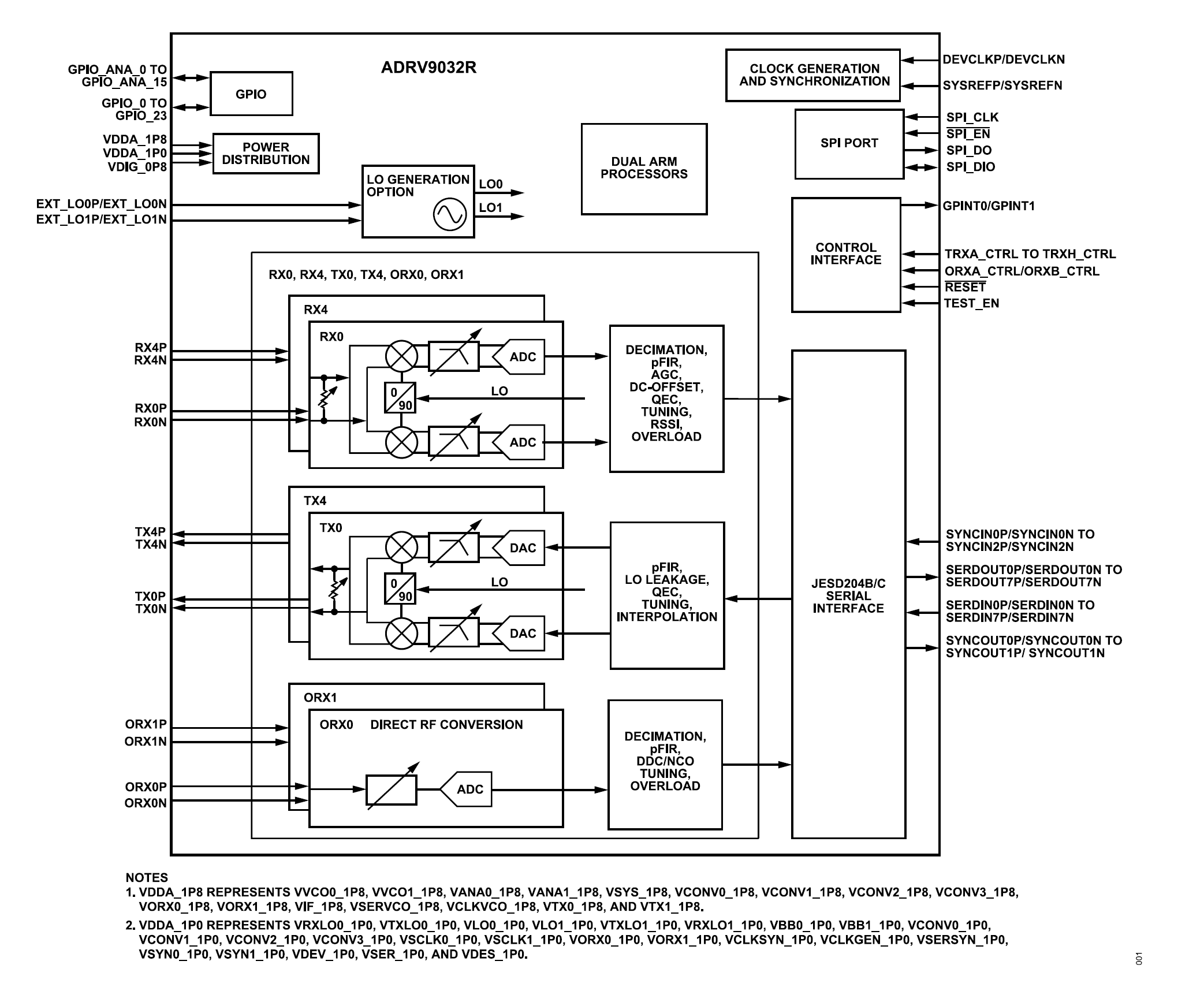
Block diagram
The ADRV9032/ADRV9032R features a zero-IF (ZIF) architecture that provides wide bandwidth with dynamic range suitable for non-contiguous multicarrier applications. The transceiver includes:
2 transmitter channels with integrated DACs
2 receiver channels with integrated ADCs
2 observation receiver channels for transmitter monitoring
Integrated RF and clock synthesizers
JESD204B/C digital interface (up to 16.5 Gbps)
SPI control interface
General purpose I/O and interrupts
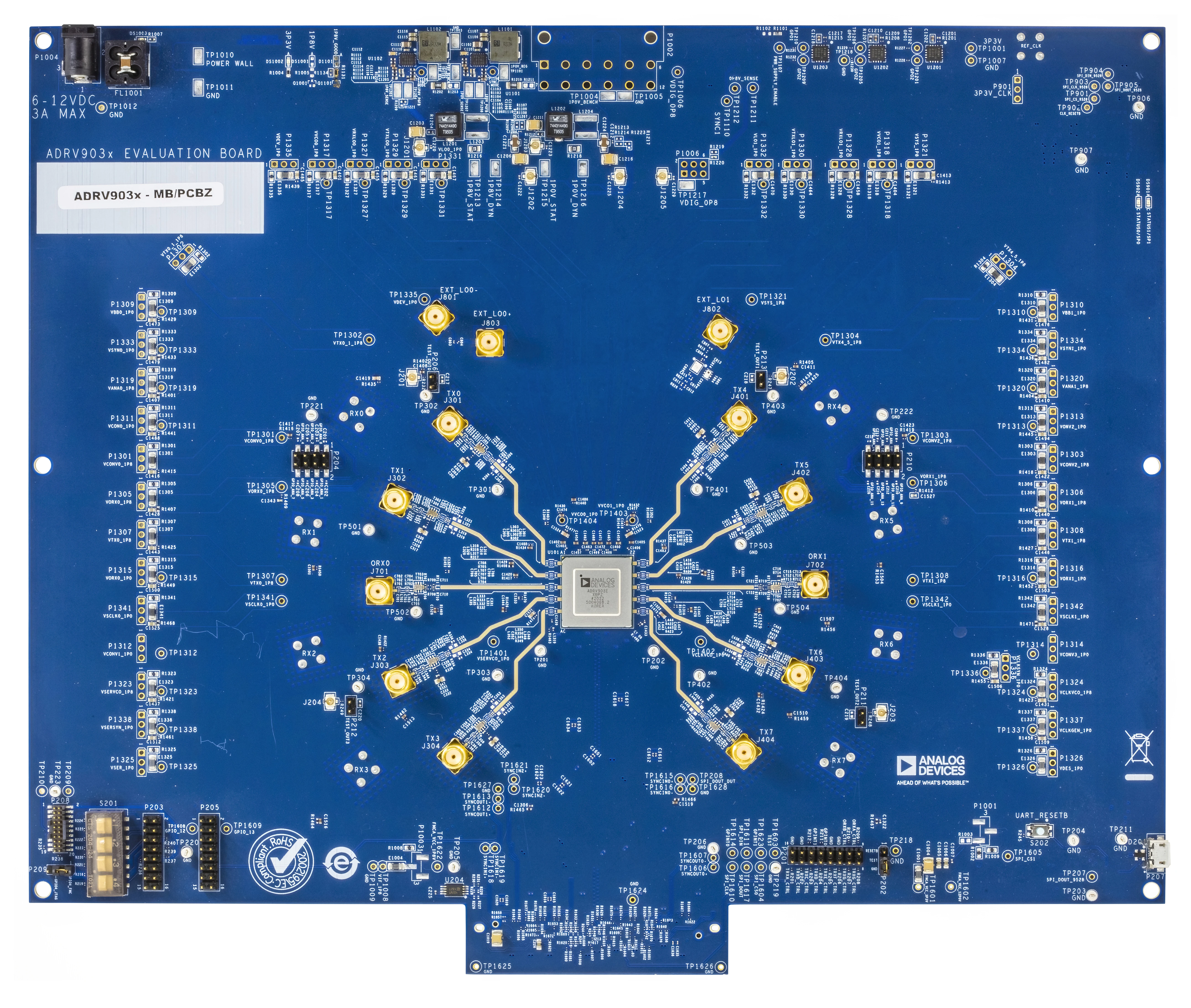
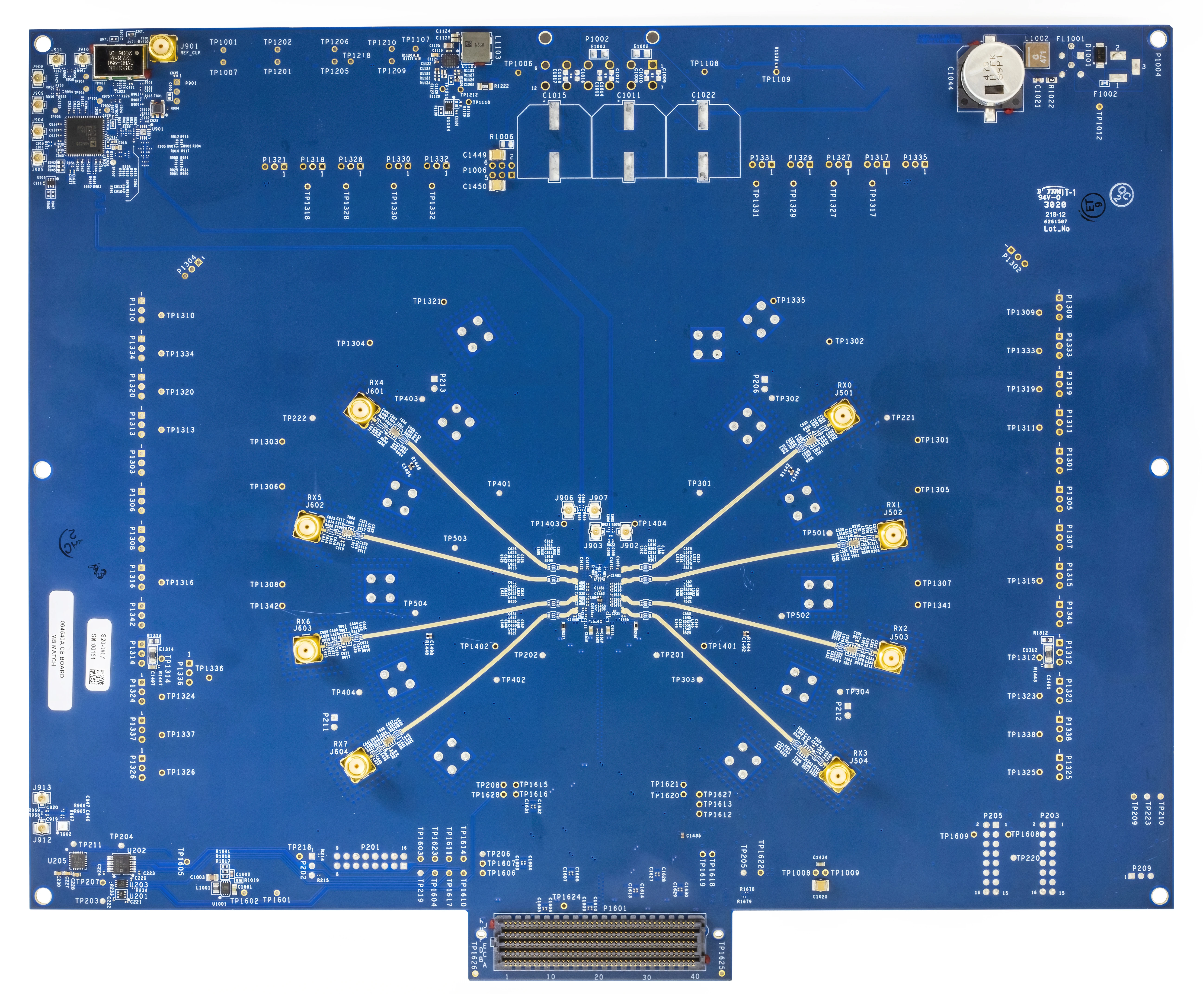
Pictures
Videos
Software Defined Radio using the Linux IIO Framework
ADI articles
Four Quick Steps to Production: Using Model-Based Design for Software-Defined Radio:
Part 2 - Mode S Detection and Decoding Using MATLAB and Simulink
Part 3 - Mode S Signals Decoding Algorithm Validation Using Hardware in the Loop
Part 4 - Rapid Prototyping Using the Zynq SDR Kit and Simulink Code Generation Workflow
About JESD standard:
MathWorks webinars
Warning
All the products described on this page include ESD (electrostatic discharge) sensitive devices. Electrostatic charges as high as 4000V readily accumulate on the human body or test equipment and can discharge without detection. Although the boards feature ESD protection circuitry, permanent damage may occur on devices subjected to high-energy electrostatic discharges. Therefore, proper ESD precautions are recommended to avoid performance degradation or loss of functionality. This includes removing static charge on external equipment, cables, or antennas before connecting to the device.