Pluto
Overview
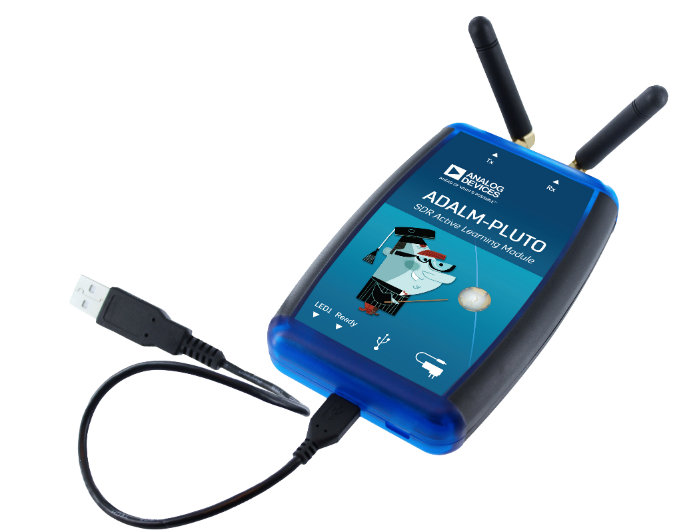
The ADALM‑PLUTO, commonly known as the Pluto SDR, is a portable, self‑contained software‑defined radio (SDR). It is designed primarily as an educational platform for students, hobbyists, and engineers to explore radio frequency (RF) concepts, wireless communication, and SDR fundamentals in a hands‑on environment. PlutoSDR acts as a personal RF lab that easily fits into a pocket and connects to a computer over USB. It supports a wide range of software environments including MATLAB, GNU Radio, C/C++/C#, Python, and SDRangel.
Key Features and Specs
Hardware: Based on the AD9363 RF Transceiver and the Xilinx Zynq Z-7010 FPGA
RF Coverage: 325 MHz to 3.8 GHz (guaranteed), 70MHz to 6 GHz (firmware modification)
Instantaneous Bandwidth: 20 MHz (guaranteed), 56 MHz (firmware modification)
Channels: 1 Transmit (DAC) and 1 Receive (ADC). Upgradeable to 2 transmit and 2 receive channels.
Platforms: Compatible with Windows, Linux, and macOS
Full Duplex Operation (can simultaneously send and receive)
Complete documentation, user manuals, and examples for the Pluto are available in the Pluto documentation.
The below guide is meant to highlight important aspects of Pluto and guide the user through a couple of complete system level examples.
Table of Contents
This video is a quick introduction to the Pluto platform along with some simple examples:
Note
For questions or help with the Pluto SDR, please visit: EngineerZone