AD-FMCOMMS4-EBZ
1x1 RF Agile Transceiver, 70 MHz to 6.0 GHz.
Overview
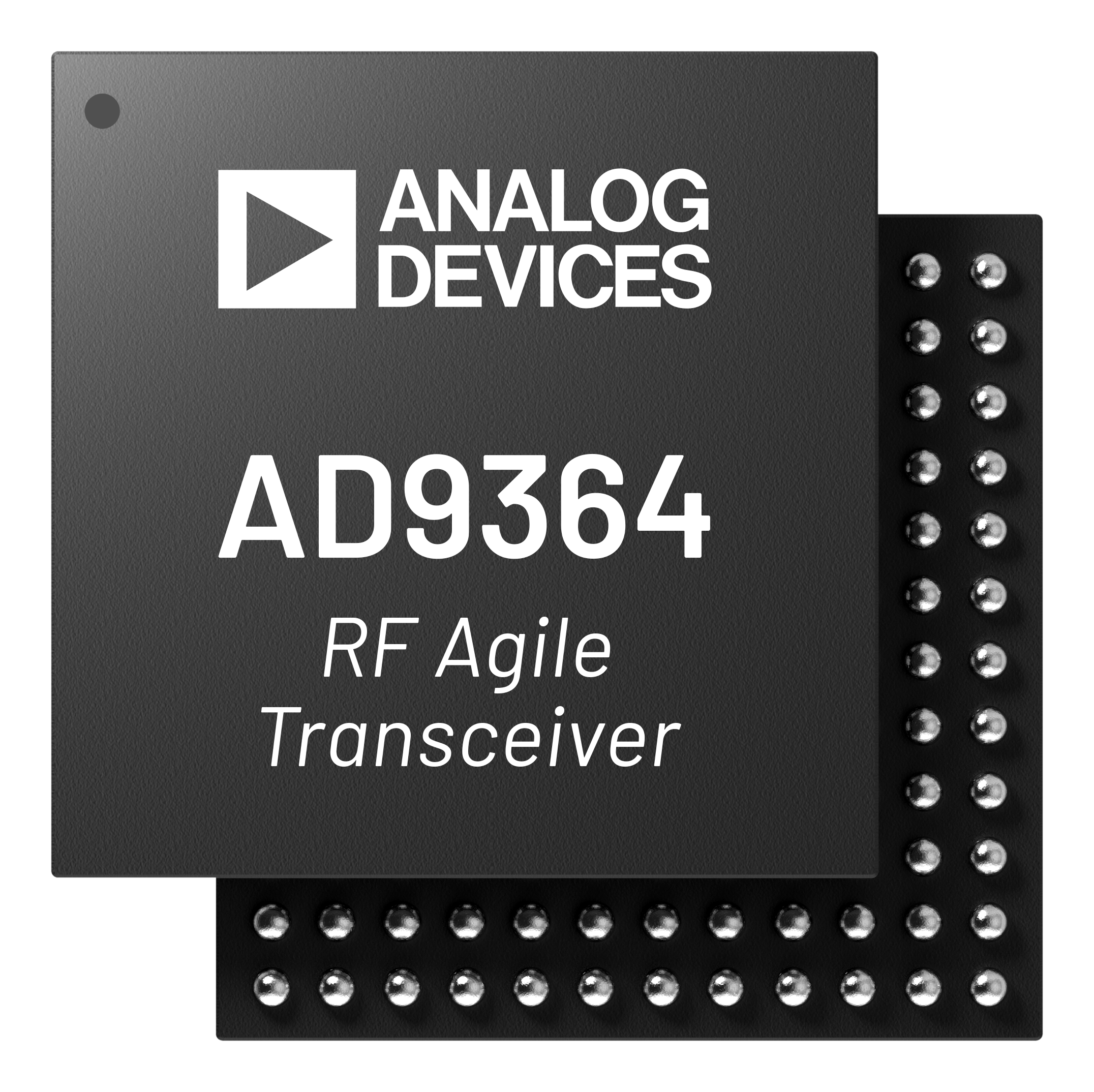
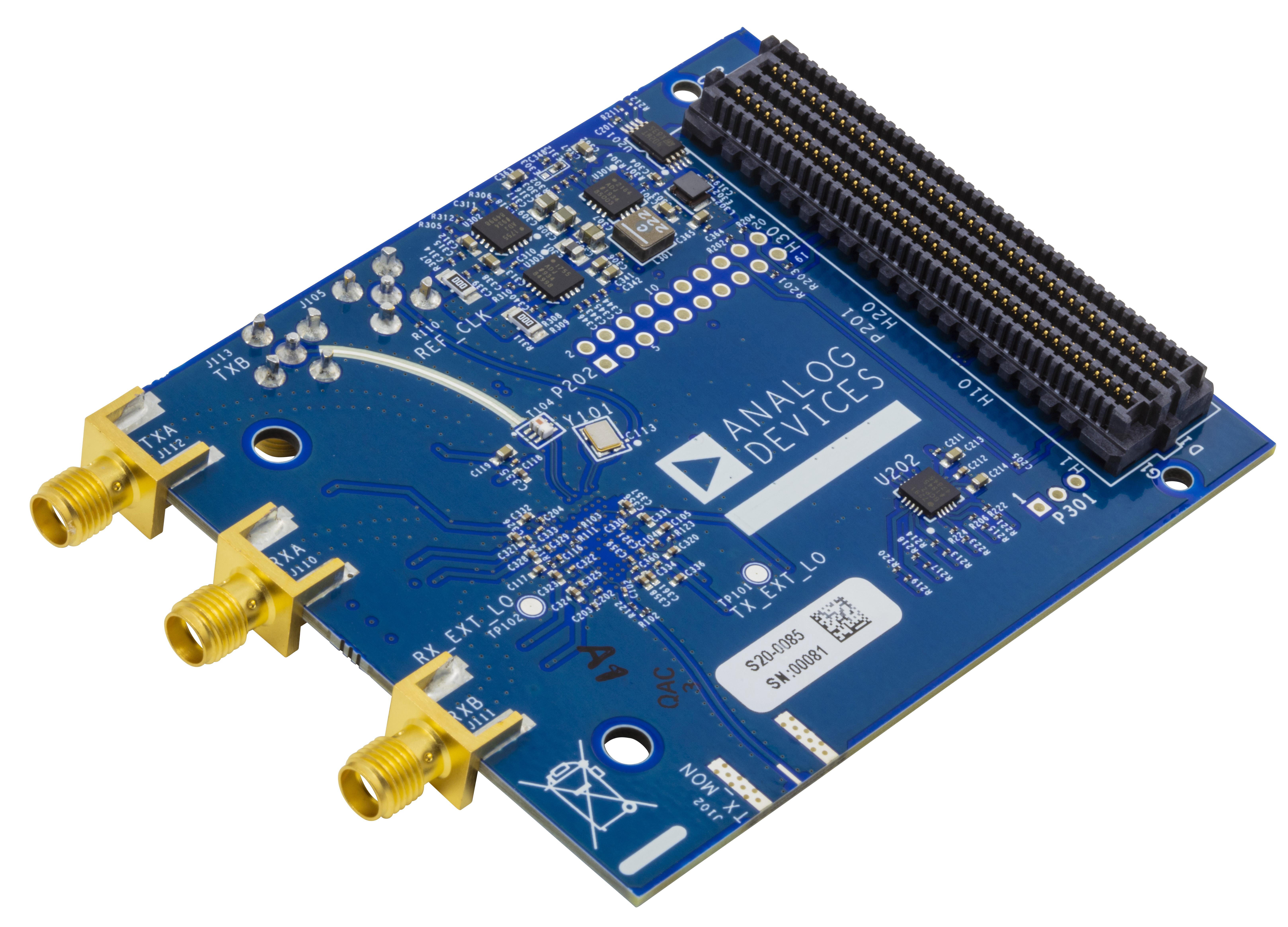
The EVAL-AD-FMCOMMS4 is an FMC board for the AD9364, a highly integrated RF Agile Transceiver. While the complete chip level design package can be found on the the ADI web site. Information on the card, and how to use it, the design package that surrounds it, and the software which can make it work, can be found here.
The purpose of the AD-FMCOMMS4-EBZ is to provide an RF platform to software developers, system architects, etc, who want a single platform which operates over a much wider tuning range (70 MHz – 6 GHz).
The AD-FMCOMMS4-EBZ is very similar to the AD-FMCOMMS2-EBZ and AD-FMCOMMS3-EBZ boards, but instead of the AD9361 (2 Rx, 2 Tx), it uses the AD9364, a lower cost 1 Rx, 1 Tx device. The board includes both types of external baluns: one targeted for wider tuning range applications (Mini-Circuits TCM1-63AX+), and one optimized for 2.4 GHz performance.
Features:
1x1 transceiver with integrated 12-bit DACs and ADCs
Tunable frequency range: 70 MHz to 6.0 GHz
Adjustable channel bandwidth: 200 kHz to 56 MHz
Dual balun options: wideband (TCM1-63AX+) and 2.4 GHz optimized
FMC-LPC system board connector
On-board power solution
Applications:
Software-defined radio (SDR)
Point-to-point communication
Wireless LAN (2.4 GHz)
General-purpose radio experimentation
Recommendations
People who follow the flow that is outlined, have a much better experience with things. However, like many things, documentation is never as complete as it should be. If you have any questions, check the Help and Support page.
To better understand the AD9364, we recommend to use the EVAL-AD-FMCOMMS4 evaluation board.
Table of contents
Hardware: This provides a brief description of the board by itself, and is a good reference for those who want to understand a little more about the board. If you just want to use the board, you can skip this section, and come back to it when you want to incorporate the AD9364 into your product.
Use the AD-FMCOMMS4-EBZ Board to better understand the AD9364
Linux Applications
Push custom data into/out of the AD9364
Design with the AD9364
Simulation
Hardware in the Loop / How to design your own custom BaseBand
MATLAB/Simulink Examples
FM Radio/Tuner (listen to FM signals on the HDMI monitor)
Design a custom AD9364 based platform
Linux software
No-OS Software
HDL reference design which you must use in your FPGA.
Additional Documentation about SDR Signal Chains
ADI Articles
Four Quick Steps to Production: Using Model-Based Design for Software-Defined Radio
MathWorks Webinars
Warning
All the products described on this page include ESD (electrostatic discharge) sensitive devices. Electrostatic charges as high as 4000V readily accumulate on the human body or test equipment and can discharge without detection. Although the boards feature ESD protection circuitry, permanent damage may occur on devices subjected to high-energy electrostatic discharges. Therefore, proper ESD precautions are recommended to avoid performance degradation or loss of functionality. This includes removing static charge on external equipment, cables, or antennas before connecting to the device.
Help and support
For questions and more information, please visit the EngineerZone technical support community.