EVAL-ADE120x
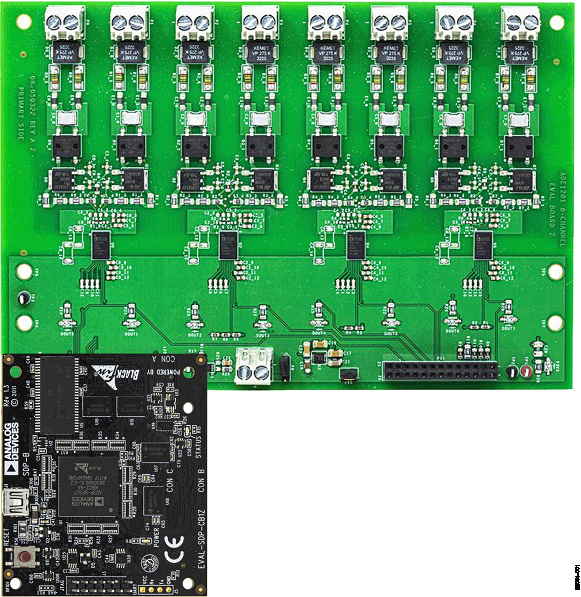
Evaluating the ADE1201/ADE1202 configurable, isolated binary input monitors.
Overview
The ADE120x is an isolated binary input monitor. It performs an isolated measurement of a binary input voltage and communicates the status of this input to low voltage processors or logic circuits. The ADE120x application circuit can accept a wide range of binary input voltages from 10 V to 300 V scaled using a resistor divider before applying the voltage to the pins.
This content applies to both ADE1201 and ADE1202.
Features:
Configurable, isolated digital input (single channel on the ADE1201, dual channel on the ADE1202)
Programmable trip threshold and on-chip debounce filter
On-chip data and power isolation
Programmable wetting current
ADC samples available for system diagnostics
Applications:
Energy transmission and distribution
Multifunction relay protection
Substation battery monitoring
Circuit breaker status indication
User guides
The user guides are provided at:
The evaluation hardware also requires one of the following controller boards:
EVAL-SDP-CB1Z, used by the LabVIEW GUI.
EVAL-SDP-CK1Z, used by the MBED software drivers.
Recommendations
People who follow the flow that is outlined, have a much better experience with things. However, like many things, documentation is never as complete as it should be. If you have any questions, feel free to ask on our EngineerZone forums, but before that, please make sure you read our documentation thoroughly.
Warning
All the products described on this page include ESD (electrostatic discharge) sensitive devices. Electrostatic charges as high as 4000V readily accumulate on the human body or test equipment and can discharge without detection. Although the boards feature ESD protection circuitry, permanent damage may occur on devices subjected to high-energy electrostatic discharges. Therefore, proper ESD precautions are recommended to avoid performance degradation or loss of functionality. This includes removing static charge on external equipment, cables, or antennas before connecting to the device.
Help and support
For other questions, see the Help and Support for ADI FMC Cards & RF SoMs page.