Pluto
Overview
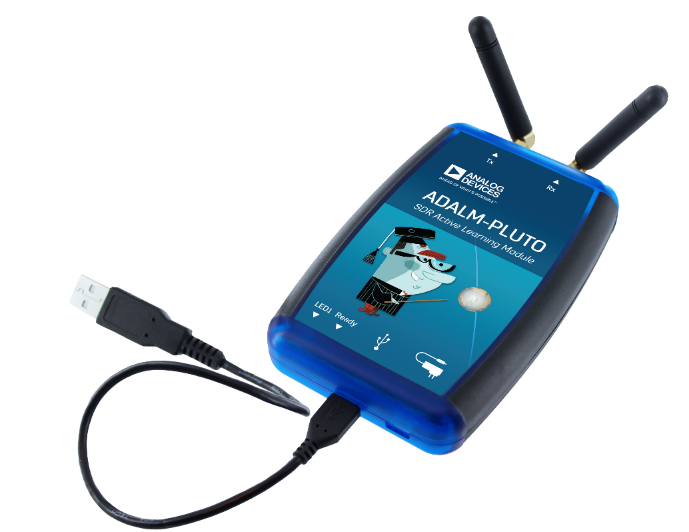
The ADALM‑PLUTO, commonly known as the Pluto SDR, is a portable, self‑contained software‑defined radio (SDR). It is designed primarily as an educational platform for students, hobbyists, and engineers to explore radio frequency (RF) concepts, wireless communication, and SDR fundamentals in a hands‑on environment. PlutoSDR acts as a personal RF lab that easily fits into a pocket and connects to a computer over USB. It supports a wide range of software environments including MATLAB, GNU Radio, C/C++/C#, Python, and SDRangel.
Key Features and Specs
Hardware: Based on the AD9363 RF Transceiver and the Xilinx Zynq Z-7010 FPGA
RF Coverage: 325 MHz to 3.8 GHz (guaranteed), 70MHz to 6 GHz (firmware modification)
Instantaneous Bandwidth: 20 MHz (guaranteed), 56 MHz (firmware modification)
Channels: 1 Transmit (DAC) and 1 Receive (ADC). Upgradeable to 2 transmit and 2 receive channels.
Platforms: Compatible with Windows, Linux, and macOS
Full Duplex Operation (can simultaneously send and receive)
Complete documentation, user manuals, and examples for the Pluto are found here: https://analogdevicesinc.github.io/documentation/tools/pluto/index.html
The below guide is meant to highlight important aspects of Pluto and guide the user through a couple of complete system level examples.
Table of Contents
This video is a quick introduction to the Pluto platform along with some simple examples:
Note
For questions or help with the Pluto SDR, please visit: EngineerZone