EVAL-AD7405FMCZ
16-Bit, Isolated Sigma-Delta Modulator, LVDS Interface.
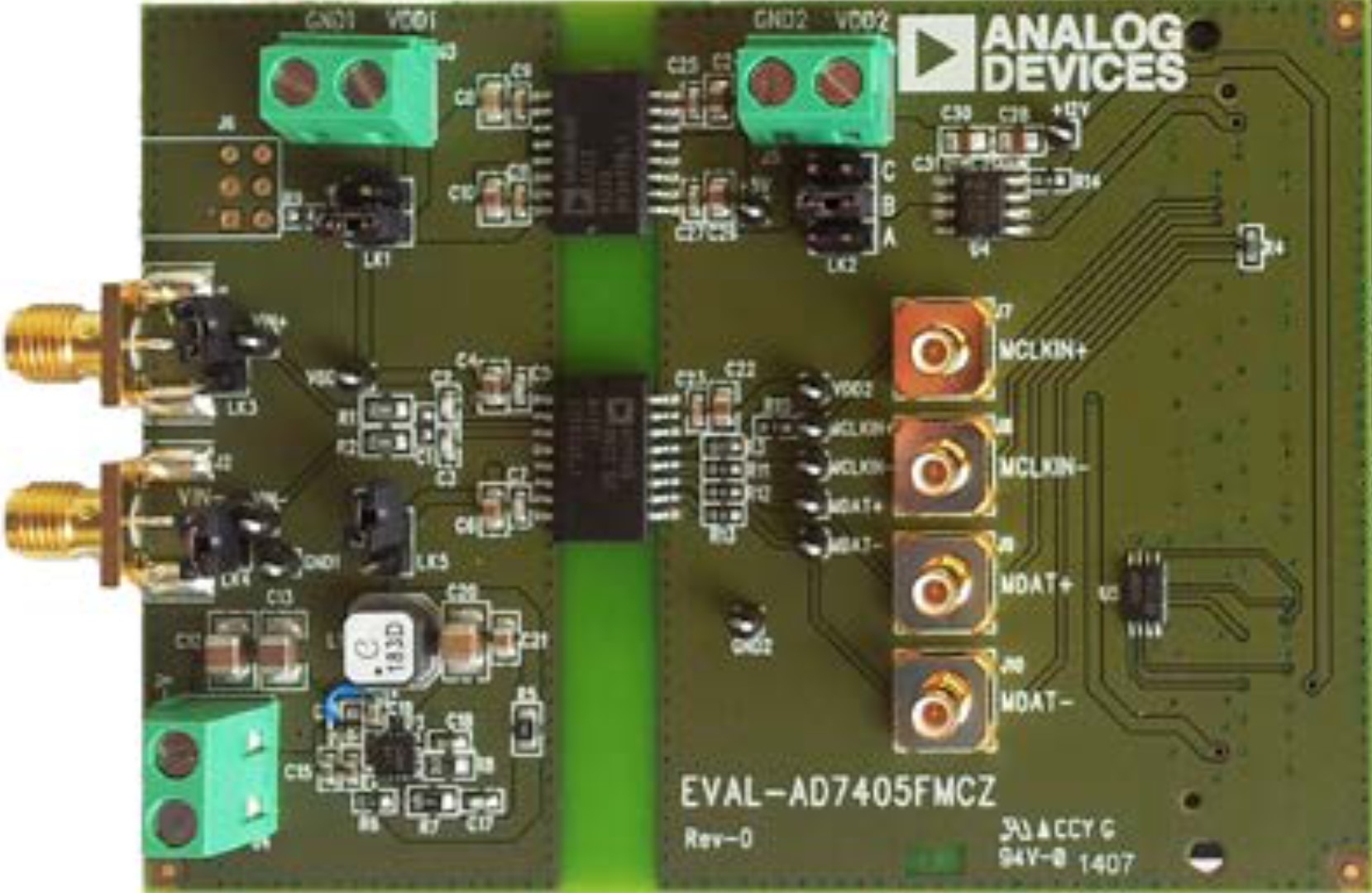
Overview
The EVAL-AD7405FMCZ is a full featured evaluation board designed to allow the user to easily evaluate all features of the AD7405 isolated analog-to-digital converter (ADC). The evaluation board can be controlled by the EVAL-SDP-CH1Z via FMCZ connector (J9). The SDP-H1 board (EVAL-SDP-CH1Z) allows the evaluation board to be controlled through a USB port of a PC using the evaluation board software available for download from the product page or from the included installer CD.
Features:
5 MHz to 20 MHz external clock input rate
16 bits, no missing codes
Signal-to-noise ratio (SNR): 88 dB typical
Effective number of bits (ENOB): 14.2 bits typical
Typical offset drift vs. temperature: 1.6 µV/°C
Low voltage differential signaling (LVDS) interface
On-board digital isolator
On-board reference
Full-scale analog input voltage range: ±320 mV
−40°C to +125°C operating temperature range
High common-mode transient immunity: >25 kV/µs
16-lead, wide-body SOIC_IC, with increased creepage package
Safety and regulatory approvals
Applications:
Shunt current monitoring
AC motor controls
Power and solar inverters
Wind turbine inverters
Data acquisition systems
Analog-to-digital and opto-isolator replacements
Recommendations
People who follow the flow that is outlined, have a much better experience with things. However, like many things, documentation is never as complete as it should be. If you have any questions, feel free to ask on our EngineerZone forums, but before that, please make sure you read our documentation thoroughly.
To better understand the AD7405, we recommend to use the EVAL-AD7405FMCZ evaluation boards.
Table of contents
Using the evaluation board/full stack reference design that we offer:
User guide - what you need to know about the evaluation board
Prerequisites - what you need to get started
-
Using the Evaluating the AD7405 with the SDP-H1 (SDP)
Design with the AD7405
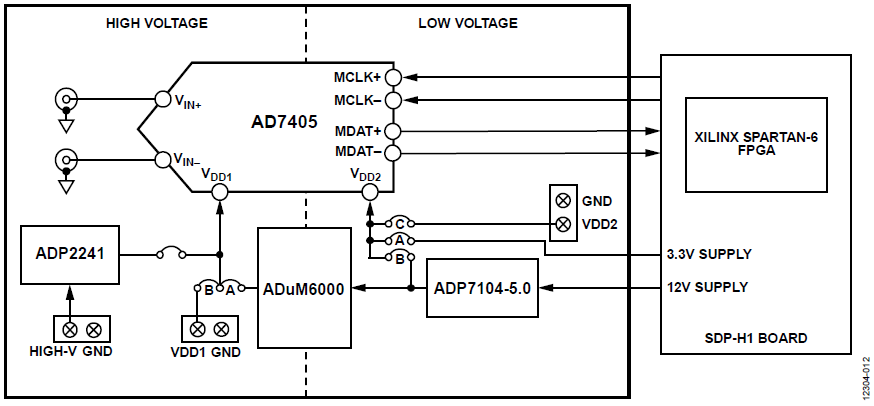
Block diagrams
EVAL-AD7405FMCZ
Warning
All the products described on this page include ESD (electrostatic discharge) sensitive devices. Electrostatic charges as high as 4000V readily accumulate on the human body or test equipment and can discharge without detection. Although the boards feature ESD protection circuitry, permanent damage may occur on devices subjected to high-energy electrostatic discharges. Therefore, proper ESD precautions are recommended to avoid performance degradation or loss of functionality. This includes removing static charge on external equipment, cables, or antennas before connecting to the device.
Help and support
Please go to Help and Support page.