AD-BMSE2E3WLC-48V
48V Battery Monitor for E2/E3W Applications
Overview
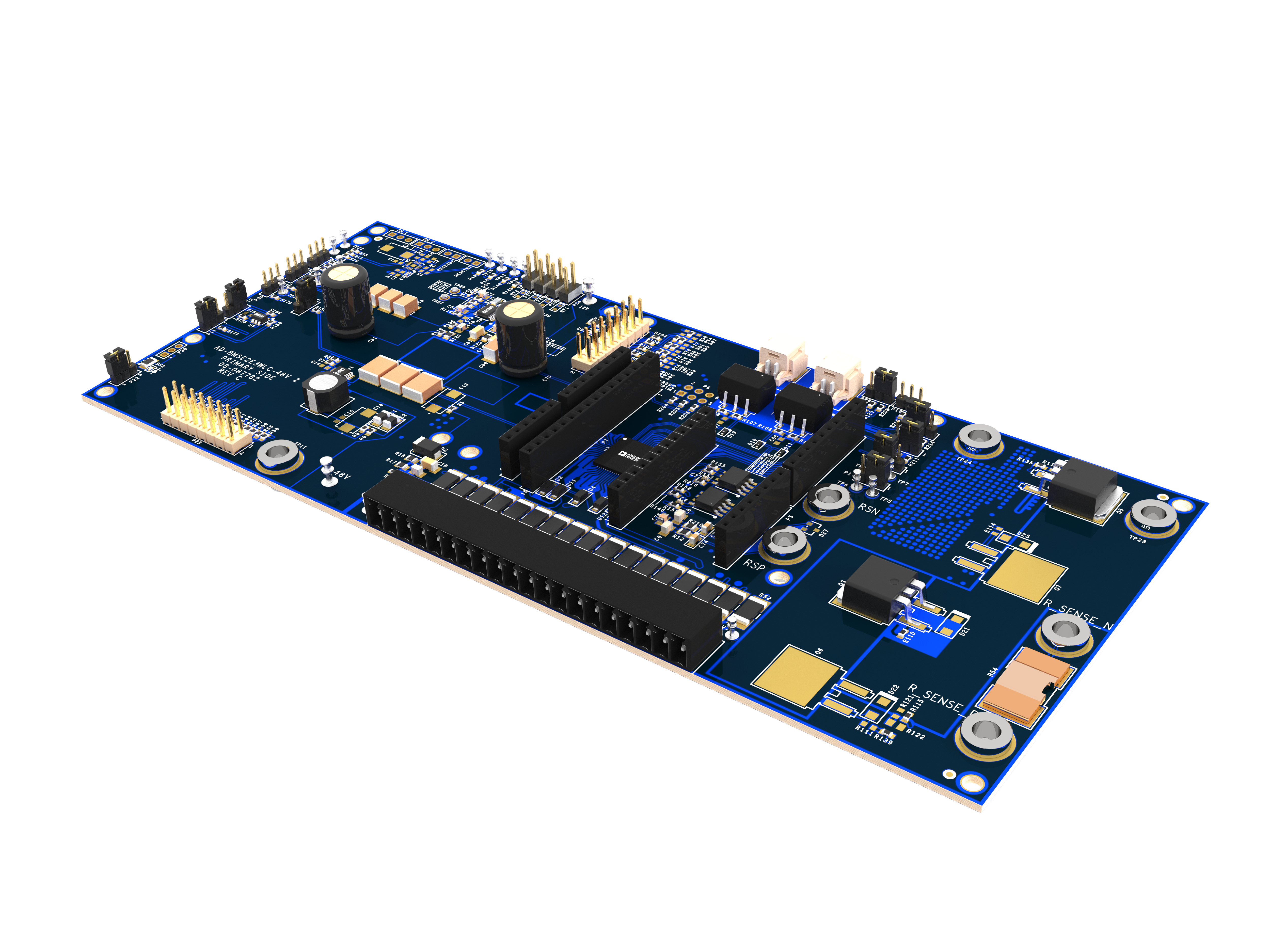
The AD-BMSE2E3WLC-48V is the baseboard of the AD-BMSE2E3WLC-SL Solution Kit, developed to simplify the evaluation and development of Battery Management Systems (BMS) for Electric 2-Wheeler (E2W), Electric 3-Wheeler (E3W), Light Electric Vehicle (LEV), and energy storage applications.
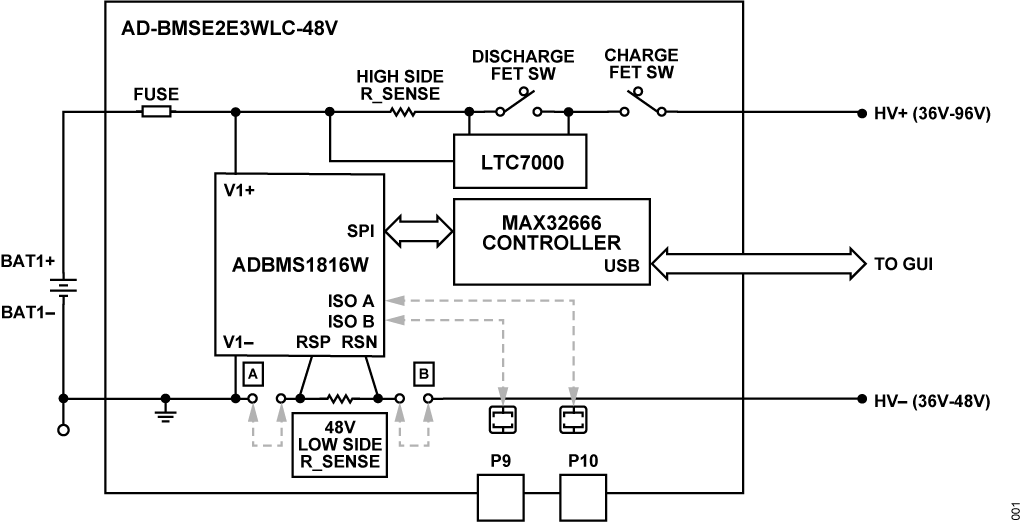
Operating over a battery voltage range of 36V to 48V and supporting currents up to 100A, the board integrates battery monitoring, current sensing, power-path control, communication interfaces, and MCU connectivity into a single platform.
When paired with the EVAL-ADBMS1816WLC Daughter Board, it enables high-accuracy cell voltage measurement, temperature monitoring, SOC/SOH estimation, and battery protection functions required for modern electric mobility systems.
Built around the automotive-grade ADBMS1816W battery monitoring IC, the AD-BMSE2E3WLC-48V Baseboard supports multiple battery chemistries, including Li-ion, LiFePO4, Ni-MH, and Sodium-ion batteries. Its MCU-agnostic architecture, Arduino-compatible headers, FeatherWing connector, and isoSPI communication interface provide flexibility for integration into centralized, distributed, or modular BMS architectures.
The platform also includes charge and discharge control circuitry, high-side and low-side current sensing, daisy-chain capability for higher cell-count systems, and compatibility with open-source firmware and GUI software for real-time monitoring, diagnostics, visualization, and rapid prototyping of BMS applications.
Features
Wide Range BMS System
can operate from 36V to 48V, can handle currents up to 100A
Battery Chemistry Compatibility
Supports multiple battery chemistries: Ni-MH, Li-ion, LiFePO4, Sodium-ion, and others
System Integration
Plug-and-play integration
MCU-agnostic design for easy integration into existing systems
Flexible topology support: Centralized, Distributed, and Modular configurations
Monitoring Capabilities
Cell voltage accuracy: ±3.6mV
Temperature monitoring: Up to 8 sensors
SOC/SOH Coulomb counting
High-side and low-side current sensing
Vehicle State Management
E2W/E3W vehicle state condition readiness
Support for Driving, Charging, Parking, and Fault states
Connectivity and Software
Daisy-chaining ready for multi-board configurations
Comprehensive GUI compatible with any PC/laptop
Integrated firmware and GUI software suite
Real-time monitoring, diagnostics, and data plotting capabilities
Open-source BMS example codes provided
Applications
Medium to High Performance Electric and Hybrid 2-Wheeler and 3-Wheeler Vehicles
Light Electric Vehicles
BMS Battery Research and Development
Adaptive Battery Type System Monitoring
Portable Energy Storage Systems
System Architecture
Specifications
Parameter |
Min |
Typical |
Max |
Unit |
Notes |
|---|---|---|---|---|---|
ADBMS1816W Cell Monitor |
|||||
VREG Supply |
4.5 |
5 |
5.5 |
V |
|
VREF1, VREF2 |
3 |
3.3 |
V |
Supply to internal ADCs |
|
VRES/VDD |
4.5 |
5 |
5.5 |
V |
|
Operating Temperature |
-40 |
125 |
°C |
||
CPIN Input Range |
-2.5 |
5.5 |
V |
||
Cell Count |
1 |
32 |
Minimum 17 cells to initiate daisy chain |
||
Drive Voltage Range |
-0.3 |
6 |
V |
Relative to each cell monitor V- |
|
VP Range |
16 |
80 |
V |
||
VREG Pack Monitor |
4.5 |
5 |
5.5 |
V |
User Guides
Proceed to the following pages for detailed information on how to use and evaluate the AD-BMSE2E3WLC-48V reference design:
Resources
Design & Integration Files
Download
AD-BMSE2E3WLC-48V Design Support Package
Schematic
PCB Layout
Bill of Materials
Allegro Project
Help and Support
For questions and more information, please visit the EngineerZone Support Community.