AD-FMCDAQ2-EBZ
Dual 14-bit 1 GSPS ADC and quad 16-bit 2.8 GSPS DAC FMC evaluation board.
Overview
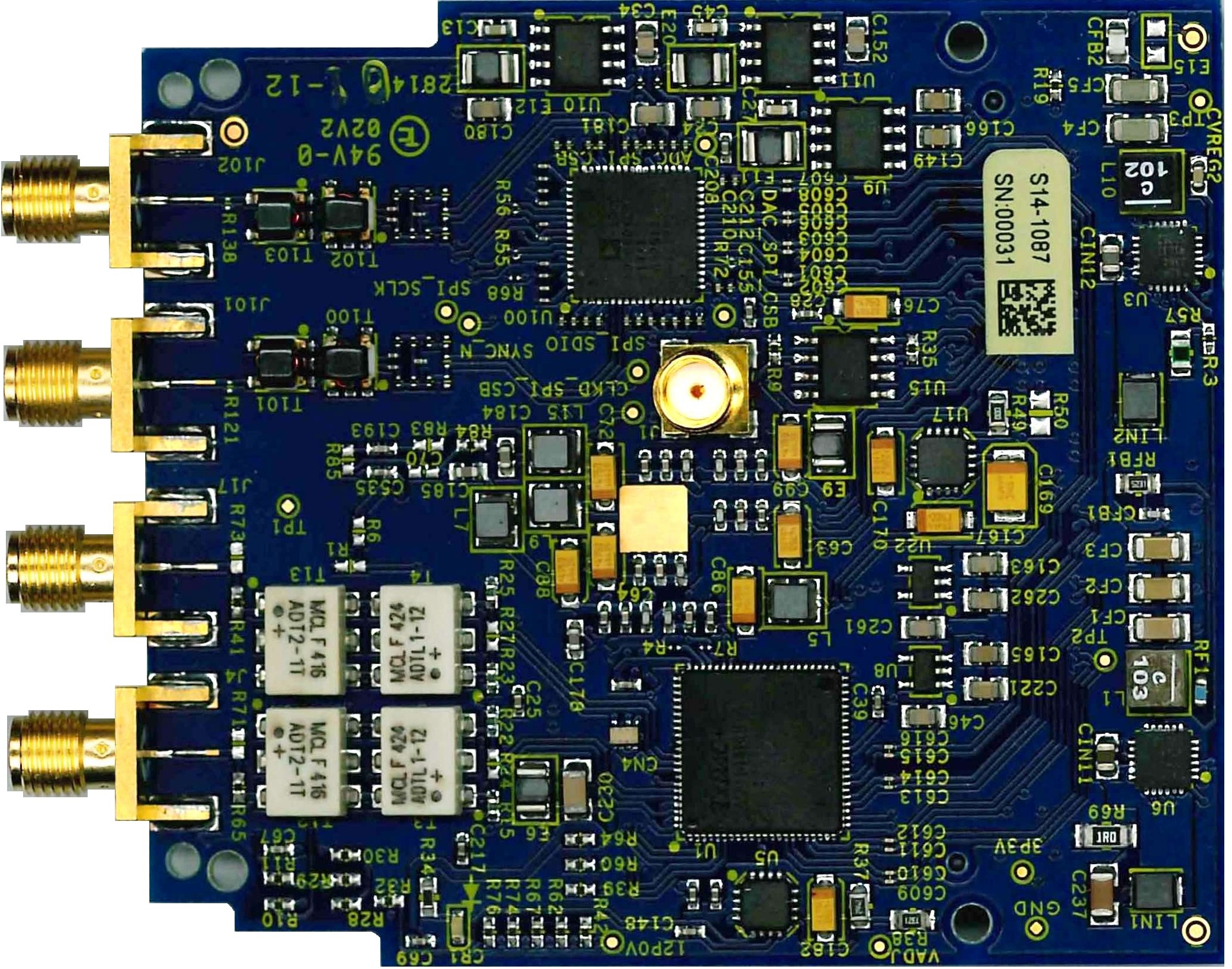
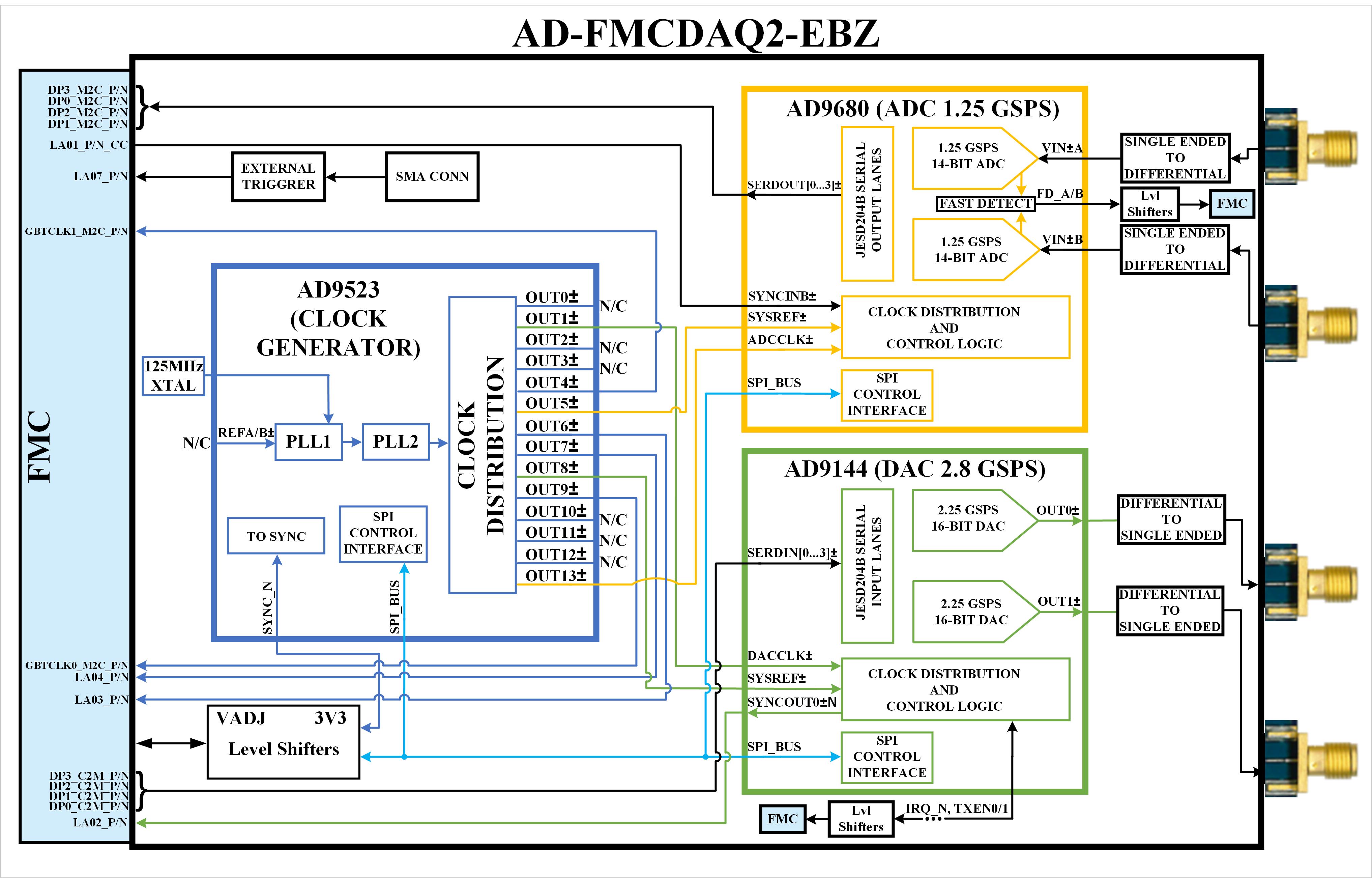
The AD-FMCDAQ2-EBZ module is comprised of the AD9680 dual, 14-bit, 1.0 GSPS, JESD204B ADC, the AD9144 quad, 16-bit, 2.8 GSPS, JESD204B DAC, the AD9523-1 clock, and power management components. It is clocked by an internally generated carrier platform via the FMC connector, comprising a completely self-contained data acquisition and signal synthesis prototyping platform.
Features:
Includes schematics, layout, BOM, Gerber files, HDL, Linux® drivers, IIO Oscilloscope, VisualANALOG
FMC-compatible form factor
Powered from single FMC connector
Two channels of ADC and two channels of DAC with full synchronization
Applications:
Electronic test and measurement equipment
General-purpose software radios
Radar systems and signals intelligence (SIGINT)
Ultra wideband satellite receivers
Point to point and MIMO communication systems
Automated test equipment
Recommendations
People who follow the flow that is outlined have a much better experience. However, like many things, documentation is never as complete as it should be. If you have any questions, feel free to ask on our EngineerZone forums, but before that, please make sure you read our documentation thoroughly.
To better understand the AD9144 / AD9680, we recommend using the AD-FMCDAQ2-EBZ evaluation board.
Table of contents
Using the AD-FMCDAQ2-EBZ full stack reference design:
Prerequisites — what you need to get started
Configure an SD card with Kuiper
Linux applications:
Block diagram
ADI articles
About the JESD204B standard:
Warning
All the products described on this page include ESD (electrostatic discharge) sensitive devices. Electrostatic charges as high as 4000V readily accumulate on the human body or test equipment and can discharge without detection. Although the boards feature ESD protection circuitry, permanent damage may occur on devices subjected to high-energy electrostatic discharges. Therefore, proper ESD precautions are recommended to avoid performance degradation or loss of functionality. This includes removing static charge on external equipment, cables, or antennas before connecting to the device.
Help and support
Please go to Help and Support page.