AD-FMCOMMS8-EBZ
Quad Wideband RF Transceiver FMC Module.
Overview
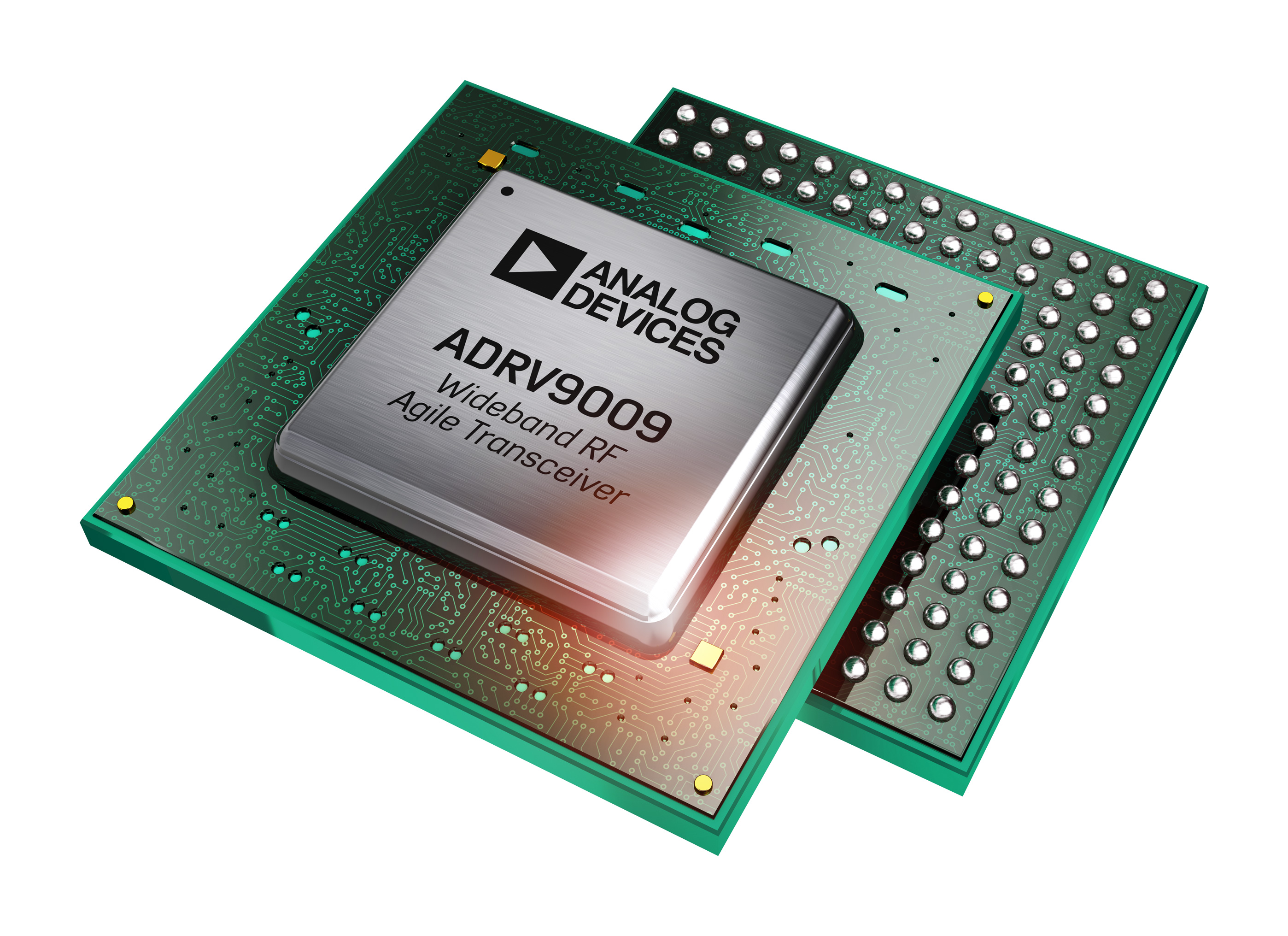
The EVAL-AD-FMCOMMS8-EBZ is an integrated RF design containing two Analog Devices ADRV9009 wideband transceivers. By connecting to a compatible FPGA development board that supports FMC HPC mechanical connector and JESD204B bus interface it can be used for evaluation and prototyping with up to 4 Transmit and Receive channels that can be synchronised in phase and frequency. Additionally it can be used with the ADRV9009-ZU11EG RF-SOM system, giving a path to evaluating and prototyping with up to 8 phase and frequency synchronised Transmit and Receive channels for complex multi-stream applications ensuring end-to-end deterministic latency.
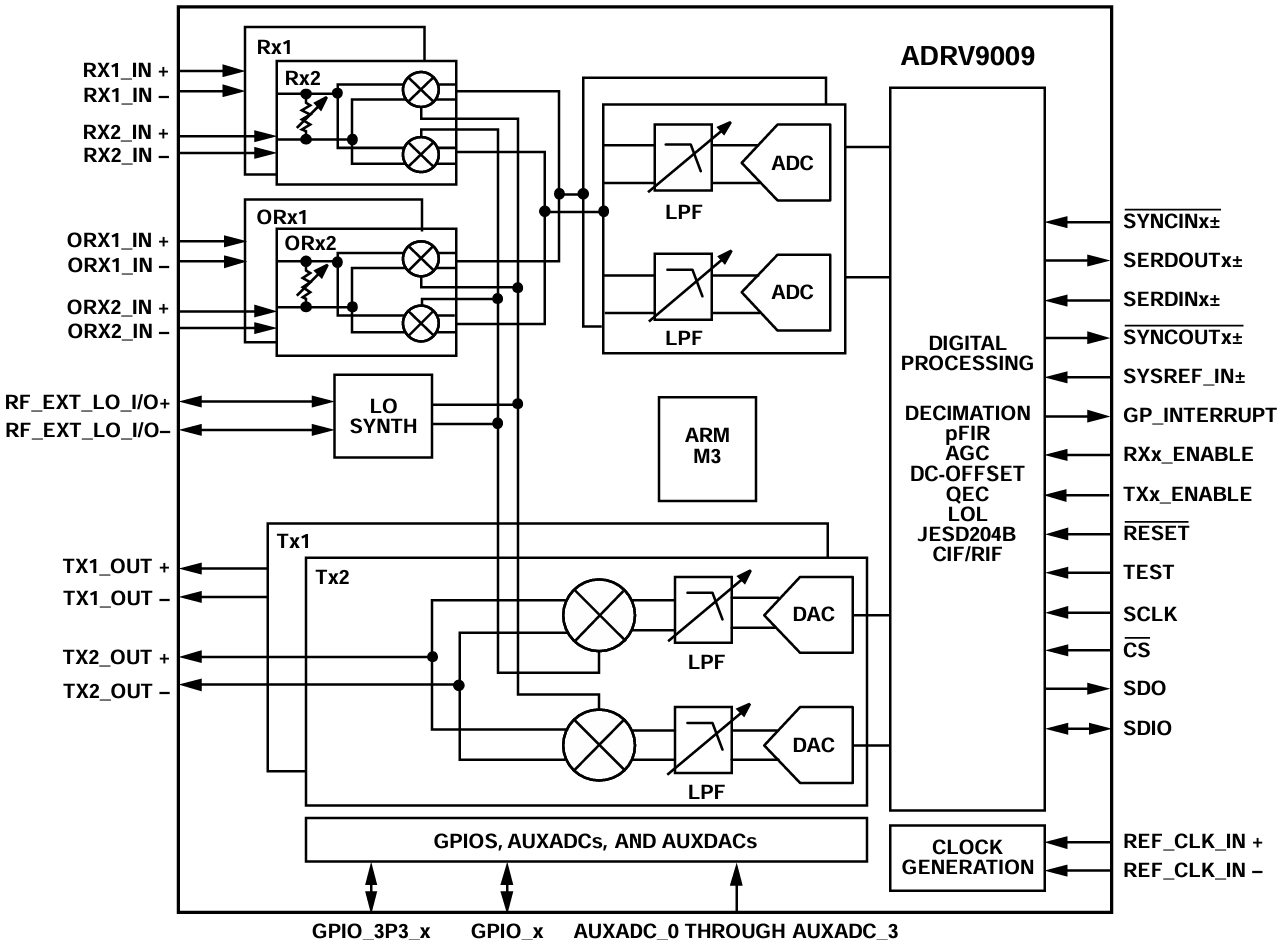
The ADRV9009 Transceivers include integrated LO and phase synchronization. Overall system frequency and phase synchronization is maintained with a clock tree structure using ADI high performance low jitter HMC7044 device, making it ideal for applications requiring RF phase alignment with a large number of channels.
Features:
Two ADRV9009 devices providing quad transmitters, quad receivers, and quad input observation receivers for DPD
Max Rx BW: 200 MHz
Max Tunable Tx synthesis BW: 450 MHz
Max Observation Rx BW: 450 MHz
Fully integrated fractional-N RF synthesizers
Multi-chip phase synchronization for all RF LO and baseband clocks
Tuning range: 75 MHz to 6000 MHz
FMC HPC compatible interface
VITA 57.1 mechanical dimensions (84 mm x 69 mm)
Applications:
Multi-channel RF systems
Digital pre-distortion (DPD)
Phased array and beamforming
Software-defined radio (SDR)
MIMO communications
Recommendations
People who follow the flow that is outlined have a much better experience with things. However, like many things, documentation is never as complete as it should be. If you have any questions, check the Help and Support section at the bottom of the page.
Table of contents
Using the evaluation board/full stack reference design that we offer:
Prerequisites - what you need to get started
-
Using the ADRV9009-ZU11EG
Using the ZCU102
Using the Arria10 SoC
Configure an SD Card with Kuiper
Linux Applications
Design with the ADRV9009
Hardware in the Loop / How to design your own custom BaseBand
Resources for designing a custom ADRV9009-based platform
For Linux software:
Block diagram
Warning
All the products described on this page include ESD (electrostatic discharge) sensitive devices. Electrostatic charges as high as 4000V readily accumulate on the human body or test equipment and can discharge without detection. Although the boards feature ESD protection circuitry, permanent damage may occur on devices subjected to high-energy electrostatic discharges. Therefore, proper ESD precautions are recommended to avoid performance degradation or loss of functionality. This includes removing static charge on external equipment, cables, or antennas before connecting to the device.
Help and support
For questions and more information, please visit the EngineerZone technical support community.